
Common reasons owners contact us
Small defects can allow water movement and soil loss to continue behind the wall. A practical inspection helps separate cosmetic cracking from movement that needs engineering or more substantial repair.
- Cracks opening through wall panels or capping
- Bulging, rotation or visible leaning
- Hollows and soft ground behind the wall
- Loss of fill through joints or failed drainage
- Damage around pontoon abutments and gangways
Canal wall, revetment wall or seawall?
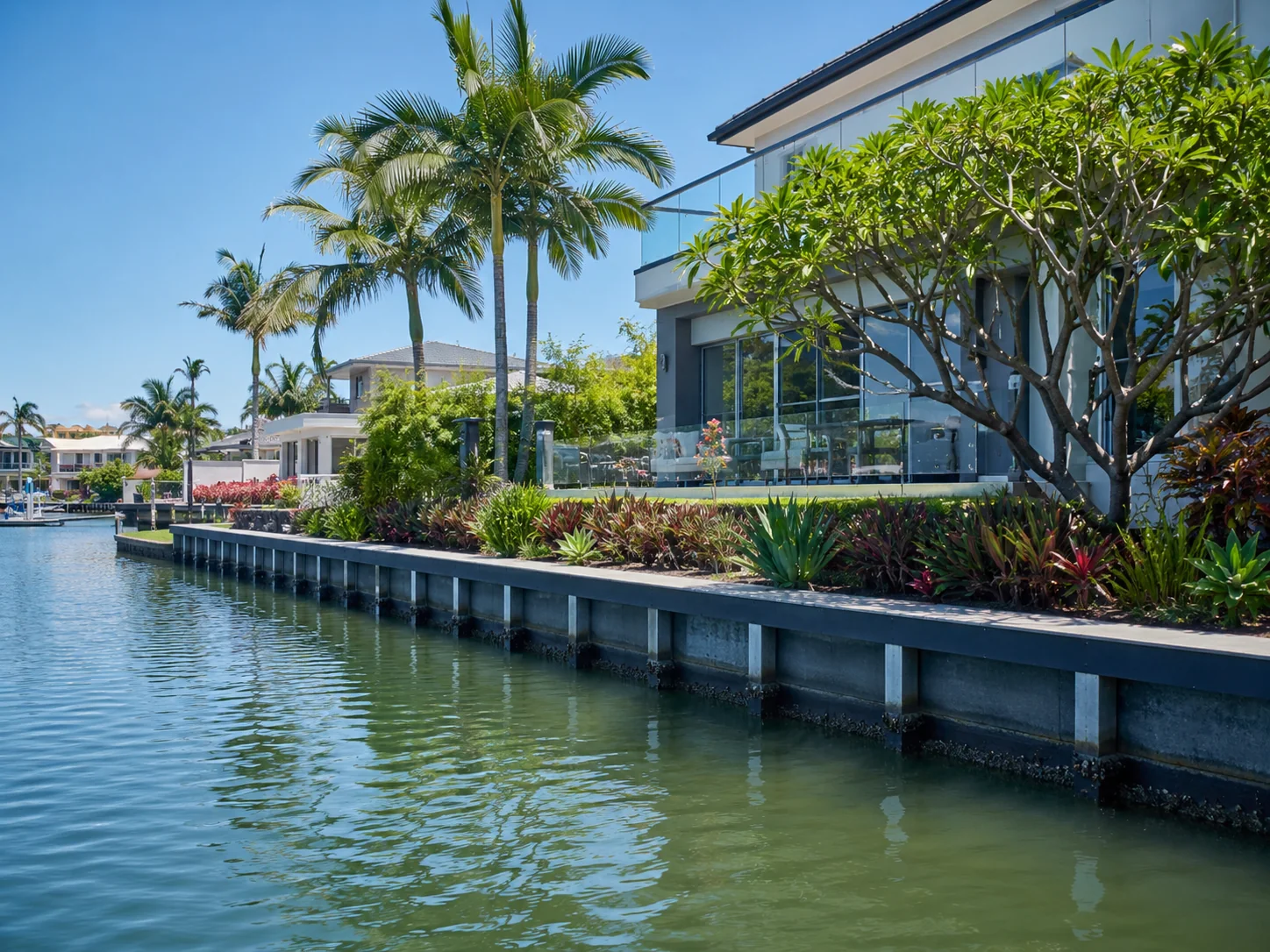
Gold Coast owners use several terms for waterfront retaining structures. On canal properties, canal wall and revetment wall are common terms, while some owners search for seawall repair. The repair method depends on the actual wall system, drainage, movement and ground conditions.
What the project pathway may include
- Site inspection and defect mapping
- Drainage and weephole checks
- Localised structural repair options
- Backfill and soil loss correction
- Engineering coordination where structural movement is involved
Pricing is not a quote. The actual cost depends on access, condition, engineering, approvals, materials and the final scope.
Why a site assessment matters
Waterfront structures work as connected systems. The visible defect may involve the wall, ground, drainage, piles, shore connection or access. A site review helps avoid pricing a surface repair that does not address the cause.
Approvals and specialist inputs
Maintenance and local repair may be straightforward. New structures, major alteration and structural replacement can require survey, engineering, tidal works information and council assessment. The required contractor and licence details are confirmed before work proceeds.